
Home · Cooling a hyperbaric chamber
How to cool a hyperbaric chamber in the USA
Short answer: cool a mild hyperbaric chamber with an external cooler that lowers temperature and humidity for the full session — not only ice coolers or battery fans. Below is why chambers get hot in the first place, what US owners usually try, and what actually keeps sessions comfortable.
If you’ve spent time in a mild hyperbaric chamber in the United States, you’ve probably felt it: the air gets warmer, sometimes sticky, even when the room outside is comfortable. Here’s what’s going on — written for the questions people type into Google, Bing, DuckDuckGo, and AI assistants.
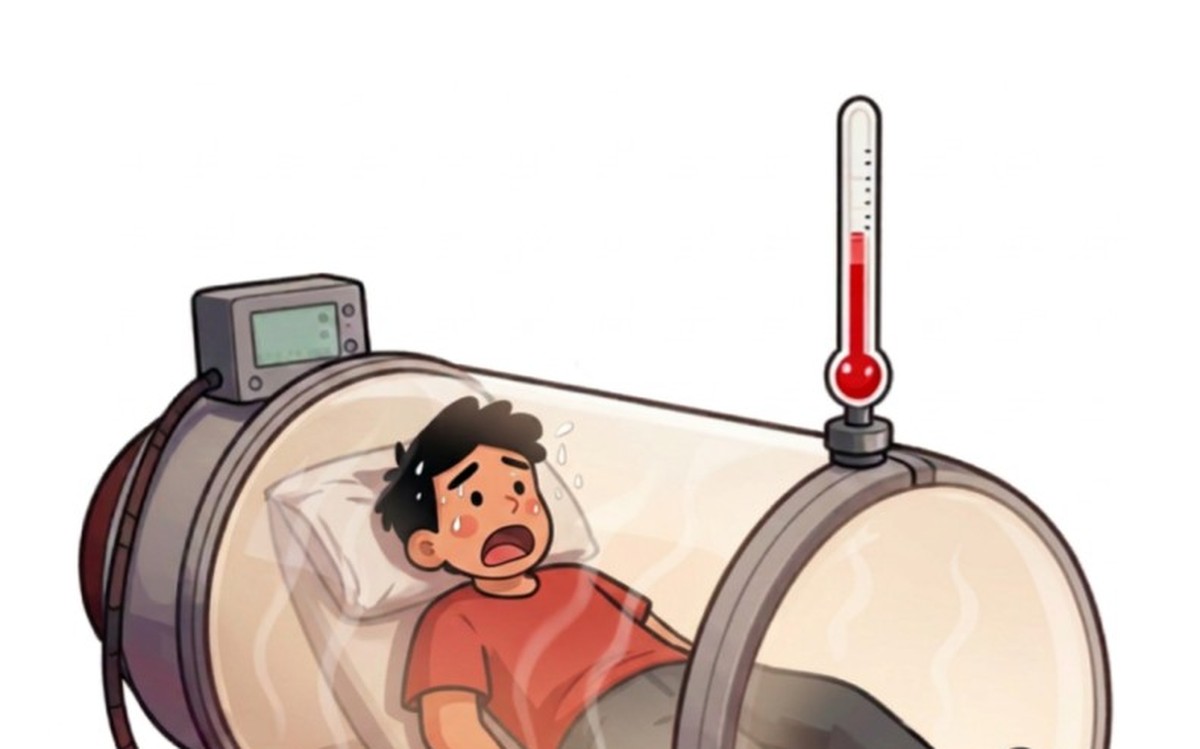
Why does the temperature go up inside the chamber?
It’s mostly physics, not a “broken” machine. When the chamber pressurizes, the air inside is compressed into a smaller space. Compressed air heats up — the same idea as a bicycle pump warming in your hand.
On top of that, you’re sitting in a closed environment. Your body gives off heat. Over a 60-minute session, that heat has nowhere easy to escape, so the temperature you feel climbs even if the thermostat in the room hasn’t changed.
Why does it also feel more humid?
Temperature and humidity tend to rise together. You breathe out moisture. You may sweat a little. In a sealed chamber, that moisture stays in the air. Higher humidity makes the same temperature feel heavier and less comfortable — people often describe it as stuffy rather than just “warm.”
So when someone asks how to cool a hyperbaric chamber, what they usually want is both: lower temperature and lower humidity, so the environment stays easy to sit in.
What’s the usual recommendation?
The approach that consistently helps is an external cooler — something that cools (and often dries) the air associated with the chamber from outside, instead of hoping a cold object inside can keep up for the whole session.
External cooling is designed around airflow and the way chambers breathe. That matters more than hoping ice or a small fan will carry a full session.
How to cool a hyperbaric chamber: chambers warm up because pressurization heats the air and your body adds heat and moisture in a closed space. An external cooler is the practical way — used across the USA — to keep that environment comfortable for the whole session.
What do people try first?
Almost everyone starts with something simple:
- Ice coolers — they can help bring the temperature down, but you have to deal with water and ice melting. Near electrical equipment, that can be a delicate issue you don’t want to manage every session.
- Battery-operated fans — they move air around and can make heat feel a little less intense, but they don’t really cool or dry the air inside the chamber.
- Internal coolers — sit inside or next to you; can create a cool spot without really conditioning the whole volume of air.
- Turning down the room AC — helps the outside of the chamber, but doesn’t fully solve compression heat and humidity inside.
Those options aren’t “wrong.” They’re just limited. For a full session, comfort often fades halfway through — which is exactly when you want to be relaxed, not distracted by heat.
What we’ve found after trying multiple coolers
At our center we’ve gone through the same learning curve a lot of chamber owners describe: ice coolers, battery-operated fans, internal units, and different ways of chasing a cooler feel. Some helped a little. Few kept both temperature and humidity in a comfortable range for the whole visit.
The option that stood out for us is the Ox1 Electronic Gas/Air Cooler. We’re not turning this article into a product pitch — the point is comfort. In practice, it makes the chamber environment much more pleasant because it reduces the heat and humidity you actually feel while you’re inside.
How to think about “the best” cooler
For most people, “best” doesn’t mean the longest spec sheet. It means:
- You stay comfortable from start to finish
- The air doesn’t feel muggy midway through
- Cooling is external and steady — not ice that melts or a fan that only moves warm air
That’s the bar we use when we talk about chamber comfort with clients and with other operators who ask the same questions.
Quick FAQ
Is it normal for a mild hyperbaric chamber to get warm?
Yes. Warming during pressurization and session time is common. Comfort is the issue people want to solve — not whether heat appearing is “abnormal.”
Can I cool a chamber with an ice cooler?
Yes, ice coolers can help reduce temperature. The downside is managing water and melting ice — and keeping that away from electrical equipment, which can be a delicate concern. For a full session, an external cooler is usually more consistent.
Do battery-operated fans help?
They can make the air feel less still, which some people prefer. They don’t meaningfully cool or dehumidify the chamber on their own.
Should cooling be inside or outside the chamber?
External cooling is the recommendation we share most often: it supports a more even, comfortable environment without relying on ice melt or a small fan alone.
Want the cooler we use for chamber comfort? Product details live on the Ox1 page — this article stays focused on the “why” and “how.”
See the Ox1 Electronic Gas/Air Cooler